Health
New Species In The Daisy Family Discovered At Big Bend National Park

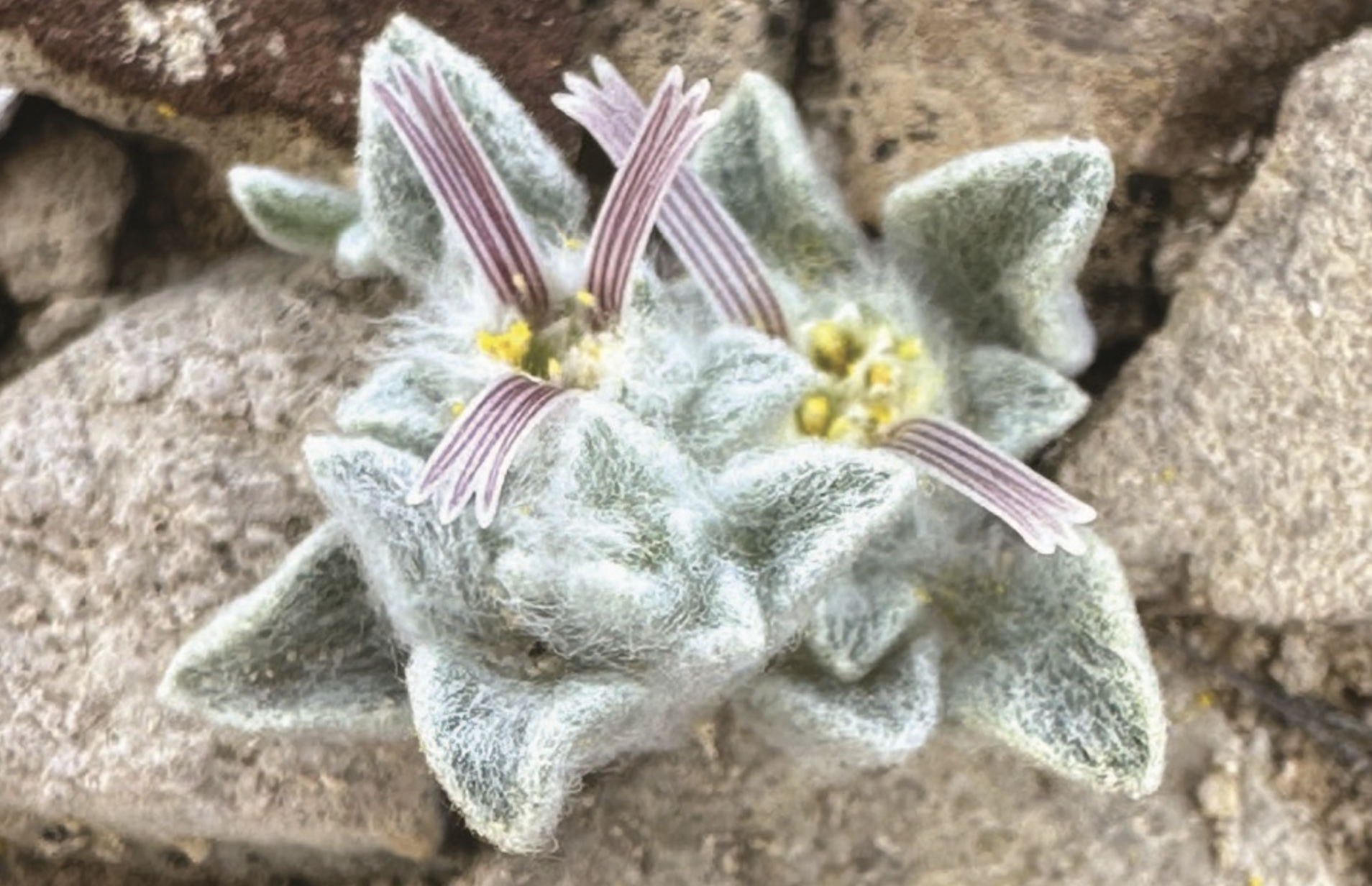
The National Park Service this week announced that staff members at Big Bend National Park in Texas last year discovered a new plant species previously unknown to science.
The discovery was made back in March 2024, and a scientific description of the species, along with results of a genetic analysis placing the specimen in the Asteraceae family, was recently published in the peer-reviewed botanical journal PhytoKeys.
A volunteer with the Big Bend National Park botany program and a supervisory interpretive park ranger spotted the tiny plants among the desert rocks in a remote area in the northern part of the park. After looking more closely, they determined the “fuzzy foliage” and flower didn’t look like anything they’d seen before.
They took photos of the plants, then consulted species databases, herbarium records, plant taxonomy publications and local experts, and posted the photos online to help identify them. When no one could identify the plants, excitement began to build.
To study the new plant, park staff were joined by the California Academy of Sciences, Sul Ross University, and Centro Interdisciplinario de Investigación para el Desarrollo Integral Regional. A genetic analysis revealed that it is not just a new species, but an entirely new genus within the Asteraceae (Daisy) family.
The new plant was given a name inspired by its appearance: Ovicula biradiata. Ovicula means ‘tiny sheep’, a reference to the wooly fuzz on the plant’s leaves, while biradiata refers to the two conspicuous ray petals in each flower. Researchers also gave the plant the common name “wooly” or “wooly devil.”
“Now that the species has been identified and named, there is a tremendous amount we have yet to learn about it,” Big Bend National Park Superintendent Anjna OConnor, said in a statement. “Im excited to discover whether there are other populations in the park, details of its life cycle, what are the pollinators, and due to the current drought, if it will be observed at all this spring.”
Big Bend National Park spans 801,165 acres, and includes multiple ecosystems, from riparian to low desert to sky island woodlands at higher elevations, contributing to its biodiversity. The wooly devil is not the first new species discovered at the park. A fossil there revealed the existence of a new species of Duck-billed dinosaur (Malefica deckerti), and a species of oak (Quercus tardifolia) once considered extinct has also been found there.
Read More From Globe
- Arnold Schwarzenegger Spends Christmas With Kids, No Mention of Love Child Joseph Baena: 'Family Is Always Together'
- Landfill Explosion in California Sends 6 to the Hospital, Prompts Evacuation Warning
- Fox News Anchor Laura Ingraham Calls Out JD Vance Following FAA Outage: 'You Guys Have Been in Charge'